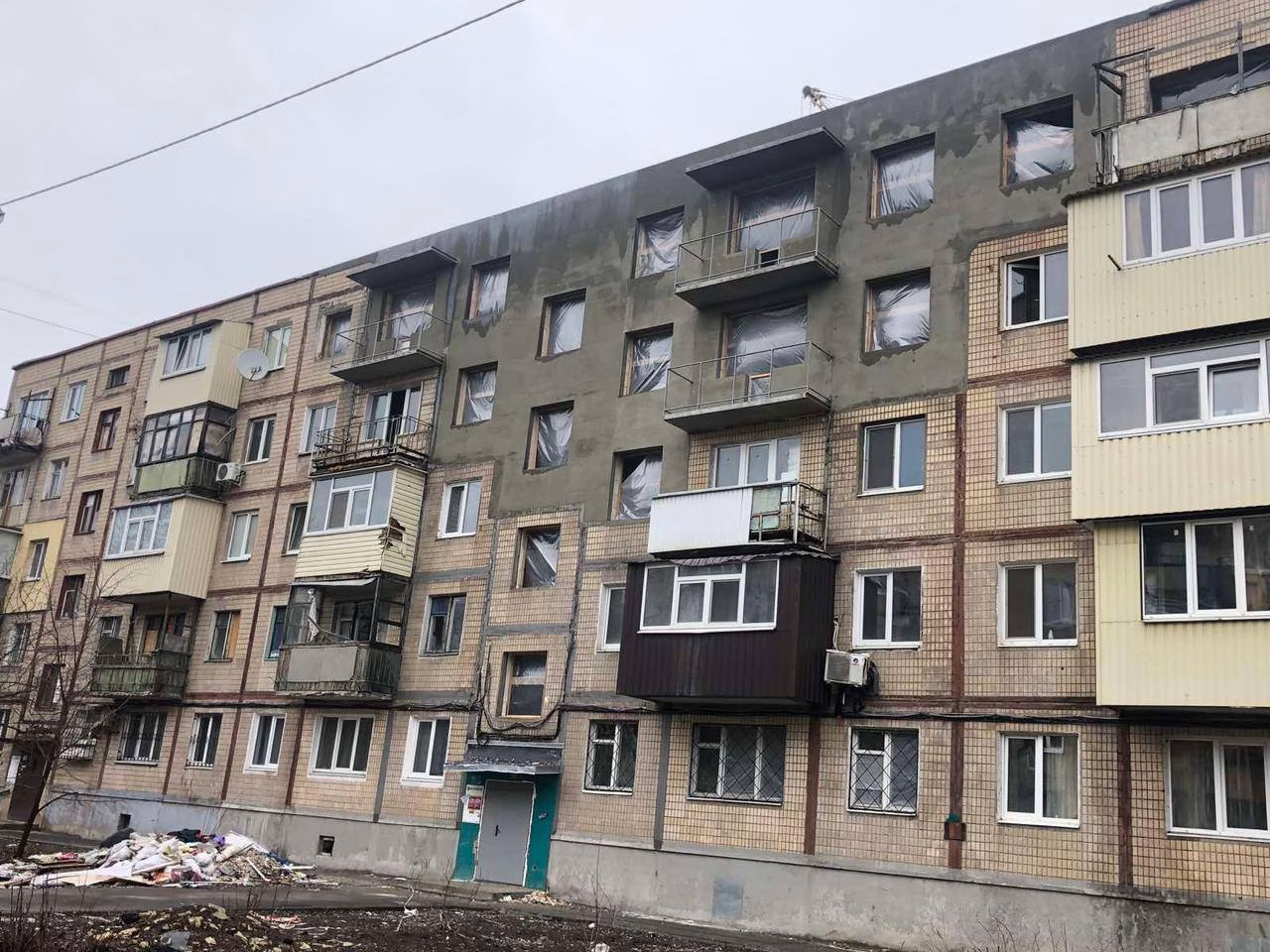
The Verkhovna Rada of Ukraine Prepares to Adopt the Law on the Demolition of Khrushchev Buildings (Draft Law No. 6458)
The Verkhovna Rada of Ukraine is moving towards adopting the “Law on the Demolition of Khrushchev Buildings” (Draft Law No. 6458), which was initially approved as a basis in September 2022. The key question: Will residents of outdated and dilapidated buildings face eviction?
How the Authorities Plan to Address the Outdated Housing Stock
To address the problem of deteriorating housing, including Khrushchevs, two main solutions are proposed:
- If the building is in need of repair, it will be reconstructed.
- If the building is deemed beyond repair and in a state of emergency, it will be demolished and replaced with a new high-rise building.
How Will It Be Determined If a Building Needs Reconstruction or Demolition?
Buildings where more than 60% of the structure, including pipes, supporting elements, and internal systems, are worn out will either be reconstructed or demolished. This will be determined by experts conducting a technical inspection.
A building that appears worn down due to cosmetic issues, such as faded paint, will not be considered for reconstruction or demolition if it meets technical standards.
Which Residential Buildings in Ukraine Will Be Demolished?
The following types of buildings will primarily be subject to reconstruction or demolition:
- Khrushchevkas
- Stalinkas
- Tsars’ houses
However, even newer buildings, if worn out by 60% or more, could also be subject to demolition. Experts estimate that the total area of outdated buildings in Ukraine amounts to 4.3 million square meters.
What Will Happen to Residents of Demolished Khrushchevkas?
If a building can be repaired without evicting residents, they will remain. However, if more extensive reconstruction or demolition is required, residents will be forced to vacate. This means evictions will occur without the consent of the tenants.
Who Approves the Reconstruction or Demolition of a Building?
For a building to be reconstructed or demolished, the consent of at least 51% of the residents is required. If the majority agrees, the dissenting 49% will not be considered, and those who disagree will be forcibly relocated to housing with an equivalent area and number of rooms.
Can New Floors Be Added During Reconstruction?
Building regulations will make it practically impossible to add extra floors to abandoned buildings during reconstruction. The supporting structures of these buildings are unlikely to support additional levels. If the building is located in a prime area, it may be declared an emergency and demolished, with a new high-rise constructed in its place.
Who Makes the Decision to Demolish a Building?
Emergency buildings will be identified by a commission working under the Law on Regulation of Urban Development Activities. The commission, consisting of seven members from the State Architecture and Urban Planning Inspection (DIAM) or local government bodies, will determine whether the building can be reconstructed according to current regulations. If not, the building will be demolished.
Where Will Residents Be Relocated if Their Building is Demolished?
If reconstruction or demolition occurs, residents will be offered relocation to similar housing in terms of area and number of rooms. During the transition, they will only pay for utilities, while housing will be provided by the state or the developer. This relocation could be temporary during reconstruction or permanent if the building is demolished.
What if the Relocated Housing Doesn’t Meet Expectations?
Residents will most likely be relocated to areas outside the city center. If the new housing is unsatisfactory, residents can receive monetary compensation equivalent to the market value of their apartment. If they disagree with the compensation amount, they can arrange for an independent valuation, which must be accepted by local authorities for full payment.
What If a Resident Disagrees with the Decision to Demolish the Building?
According to the new law, there are two potential grounds for litigation:
- Residents may appeal the decision to demolish a building, especially if it is in a desirable location.
- Residents may contest the compensation amount if the local authority refuses to offer the true market value of the property. In this case, the final amount will be determined by a forensic expert.
Can Residents Purchase a New Apartment with the Compensation?
Under the old law, compensation was limited to purchasing a property of the same size and number of rooms. For example, if a resident owned a 50-square-meter apartment, they could only buy another 50-square-meter apartment. Under the new law, residents can purchase any property, but they may need to supplement the compensation with additional funds to buy their desired apartment.
How Long Will It Take to Reconstruct an Emergency Building?
The construction timeline will be outlined in the reconstruction plan, so residents will know how long they will stay in temporary housing.
Is There a Risk of Corruption in the Law on Demolition of Khrushchevkas?
Developers may target valuable land in major cities, which raises concerns that some buildings in prime locations may be wrongly classified as unfit for reconstruction and demolished. This is a risk that will need to be monitored as the law progresses.
In conclusion, we are awaiting the final review of the draft law during the autumn session, which will provide clearer answers to these questions.
 Author Maksym Koldoba
 READ MORE TIPS
Maksym Koldoba’s insights on construction security, asset management, and safeguarding real estate against raiding and fraud.