Is the company director liable for an undeclared equipment component that was not reported by the foreign supplier?
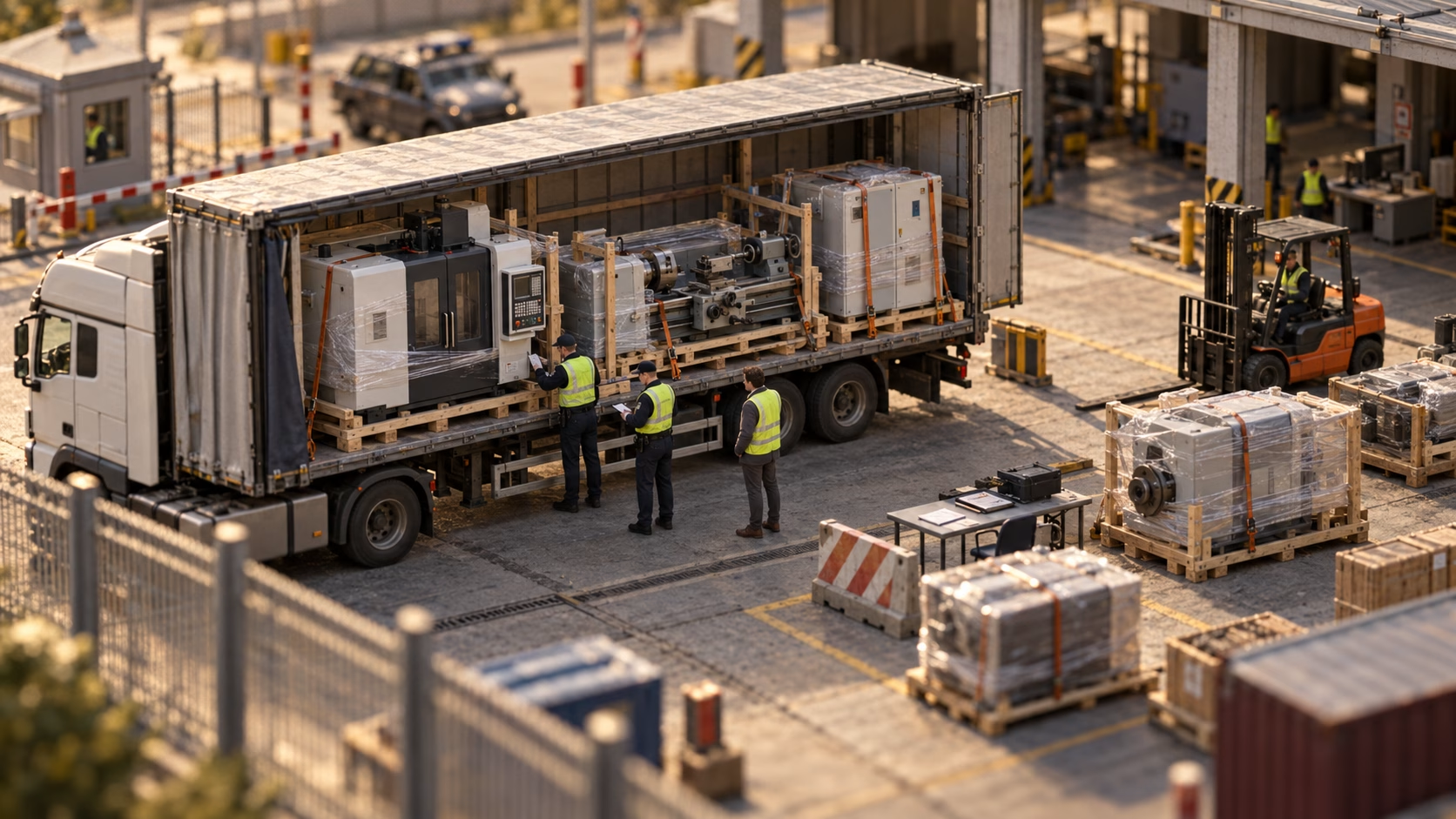
In our client’s case, customs believed it was. The company purchased a welding machine from a Chinese supplier for $11,000 and had a customs broker handle the clearance. During inspection, customs discovered undeclared refrigerant in the machine, which cannot be imported without a license.
As a result, customs seized a machine tool worth over UAH 485,000 and demanded that the company director be held administratively liable.
The business risked being fined and ultimately losing its equipment.
We will examine in this case how the ASA Group team managed to protect the company’s CEO and return the seized equipment.
Customs position
Customs claimed that:
- the machine contained the controlled refrigerant R32, the import of which requires a license;
- but the broker did not indicate R32 in the declaration, so it was imported without declaration and license;
- At the same time, the broker only acted on behalf of the company, and the client had to provide the necessary documents and information.
Therefore, customs demanded that the client’s director be personally held accountable for failing to declare the goods.
ASA Group Protection Strategy
The ASA Group team built client protection on 2 key arguments:
Argument #1. The director did not know about the presence of R32
There was no information about the refrigerant in the product description on Alibaba and the Chinese supplier’s documents.
Before shipment, the client warned the supplier about restrictions on the import of refrigerants into Ukraine and received confirmation that the machine would be shipped without them.
After customs inspection, the supplier admitted that he had mistakenly shipped a chiller with refrigerant.
So, the director did not know about R32 and did everything in his power to ensure that the equipment was shipped without refrigerant before delivery.
Argument #2. Customs did not prove the director’s intent
Customs had to prove that the director knew about R32 and deliberately failed to declare it. However, he only learned about the refrigerant during a customs inspection.
Court conclusions
The courts of first and appellate instance supported the position of ASA Group lawyers and confirmed:
- the presence of refrigerant in the machine does not prove the director’s intent to not declare;
- A managerial position does not mean automatic responsibility – customs must prove his specific guilty actions.
Result: thanks to the professional actions of the ASA Group team, the case was closed due to the lack of elements of an administrative offense, and the client was returned the seized laser welding machine with a customs value of over 485,000 UAH.
This case confirms: a violation during customs clearance does not automatically mean the company manager is at fault. Customs must establish that this person committed the illegal actions, prove their guilt and intent.