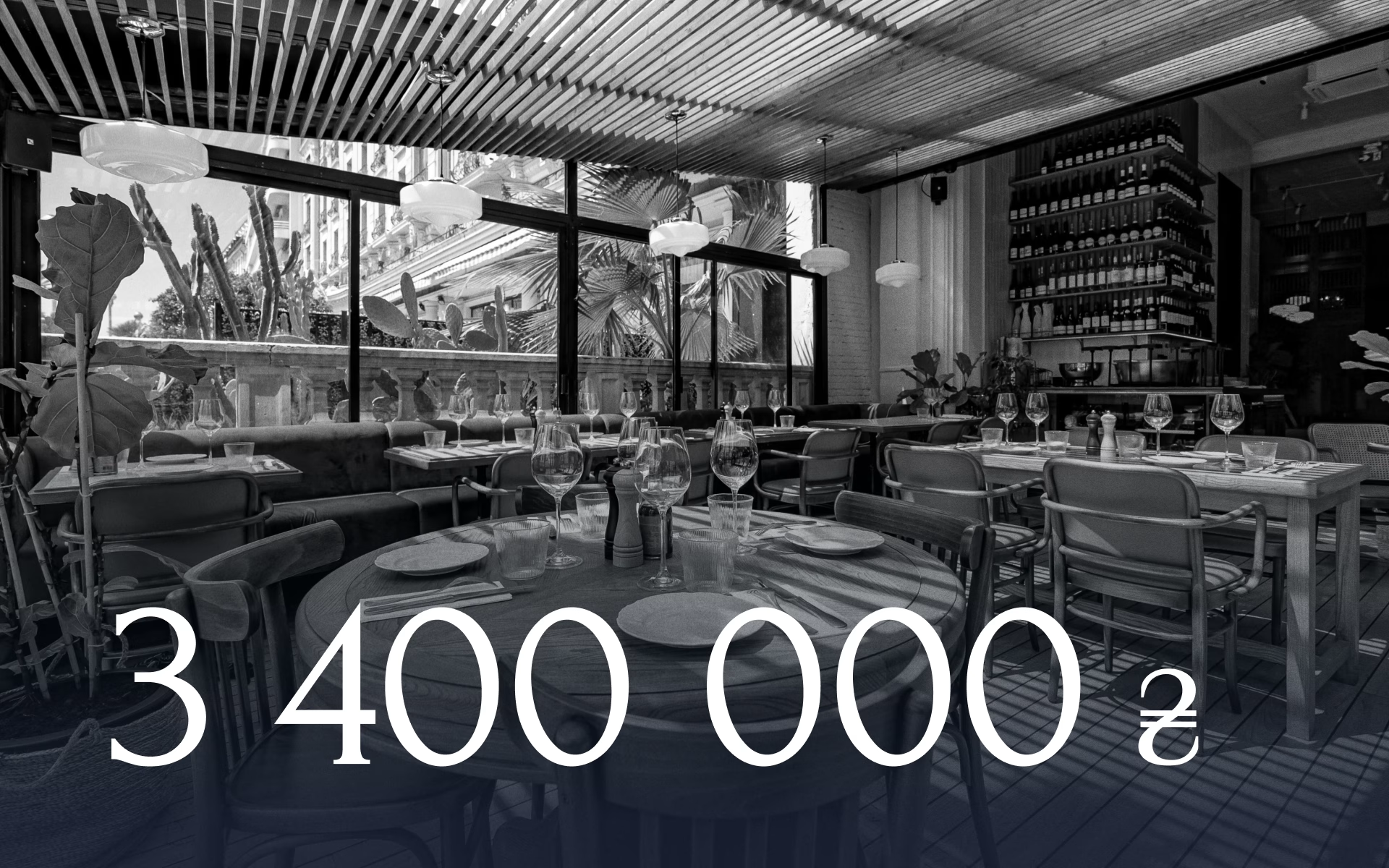
Buying premises that were previously leased? Review the agreements and handover records to avoid a dispute over property the tenant may have left behind.
Our client purchased a building that had housed a restaurant for many years. The tenant had entered into a lease with the previous owner. After the sale, the tenant demanded that our client return the equipment, furniture and other items used by the restaurant.
The tenant sought the return of 407 items with an estimated value of almost UAH 3.4 million.
The crucial point was that our client had never received these items from the former owner.
This case study explains how ASA Group’s lawyers substantiated the new owner’s position and why the court dismissed the tenant’s claim.
Why the dispute arose
The tenant’s position.
The equipment remained in the former restaurant premises, and the building’s new owner controlled access. The parties had not entered into a storage agreement, so the tenant argued that the new owner was retaining the property without a lawful basis and had to return it.
Our client’s position as the building’s new owner.
When our client purchased the property, the building handover record contained no inventory of restaurant property. Our client had not taken possession of the equipment, used it or derived any benefit from it.
The previous owner’s position as the landlord under the lease.
The previous owner had no documents establishing which items the tenant had brought into the premises, what remained inside or who might have moved the property. He had not accepted it for storage, and the lease required the tenant to remove its belongings when the lease ended.
The central issue: was the new owner’s control over access to the building sufficient to require the return of 407 items, or did the tenant also need to prove that those specific items had come into the new owner’s possession or control?
How ASA Group defended the building’s new owner
ASA Group’s lawyers built the defence around three questions: what the documents established about the restaurant’s operations, whether they proved that specific items were present, and whether the correspondence showed that our client had received them.
Step 1. Showing that records of the restaurant’s operations did not establish which items remained
The tenant provided the lease, bank statements showing rent and utility payments, cash register documentation and an alcohol licence.
These documents showed that the restaurant had operated at that address. However, they did not establish whether the tenant had brought the specific 407 items it was claiming into the premises. The lease itself contained no equipment inventory, quantities or serial numbers.
We asked the court to distinguish between two questions: whether a restaurant had operated on the premises and whether specific items remained there after the tenant stopped using them. Records of the restaurant’s operations did not answer the second question.
Step 2. Explaining why the valuation report did not prove the property’s location
The tenant provided rental agreements for some of the equipment and an independent valuation report listing all 407 items.
The report assessed the property’s market value for the purpose of calculating rental payments. ASA Group’s lawyers pointed out that it did not establish whether the valuer had personally inspected the premises and verified that every listed item was there on the valuation date.
The tenant also failed to provide purchase documentation for some of the property it claimed to own, such as contracts, delivery notes, handover records and payment documents.
Step 3. Showing that our client had not acknowledged receiving the equipment in the correspondence
The tenant relied on formal information requests from its lawyers, our client’s responses and WhatsApp correspondence. In one letter, our client asked for an inventory and documents establishing ownership of the items.
The court agreed that this request alone did not mean the new owner had acknowledged that the property was on the premises or had accepted it for storage.
The messaging correspondence also failed to answer the key questions: who had participated in the conversation, which items they were discussing and where those items were located.
What proved decisive for the court
The court could not establish exactly when the tenant had stopped using the premises or which items remained there on that date. The documents included no record of the premises being handed back that could establish these facts.
Under the lease, the tenant had to remove its belongings within five working days of termination. The tenant provided no evidence that, after ceasing to use the premises, it had requested access to remove the property and that the new owner had refused that access.
The building handover record did not list any restaurant equipment. The purchase of the property therefore did not, in itself, prove that our client had also received the items used by the restaurant.
The key finding was that the tenant had not proved that these specific 407 items remained on the premises or that our client had received or retained them.
The outcome
The court of first instance dismissed the tenant’s claim in full and ordered the tenant to bear the court costs.
Thanks to the work of ASA Group’s lawyers, the new owner successfully defended its position at first instance: the court did not order it to return restaurant property with an estimated value of almost UAH 3.4 million.
Key takeaways for businesses
— When buying a building, separately document the property inside it. Specify in the handover record which items transfer to the buyer, which belong to the tenant or third parties, and who must collect them.
— Keep an inventory of equipment brought into leased premises. Retain photographs, serial numbers, contracts, delivery notes and payment documents. These make it easier to identify the items and establish who owns them.
— When vacating premises, document any items you leave behind. List them in the handover record, identify who accepts them and agree when and how you can collect them.
— Request access to your equipment in writing. Specify which items you want to collect and when you are ready to do so. If access is refused, retain the response.
— Use a valuation to establish the property’s value. If the dispute concerns who received the equipment and where it is located, gather separate documents establishing its location and handover.