For years, entrepreneurs have complained about pressure from law-enforcement agencies — unjustified searches, account freezes and protracted investigations. This does not merely paralyse businesses; it also slows the economy as business activity declines, tax revenues fall and investors avoid the Ukrainian market.
The Verkhovna Rada now has an opportunity to change the rules of the game. Draft Law No. 12439 is scheduled for consideration by the end of the year and is intended to strengthen protection for businesses against abuse by law-enforcement authorities. The document has already received support from leading business associations and experts from the Business Ombudsman Council, who supplemented it with their recommendations.
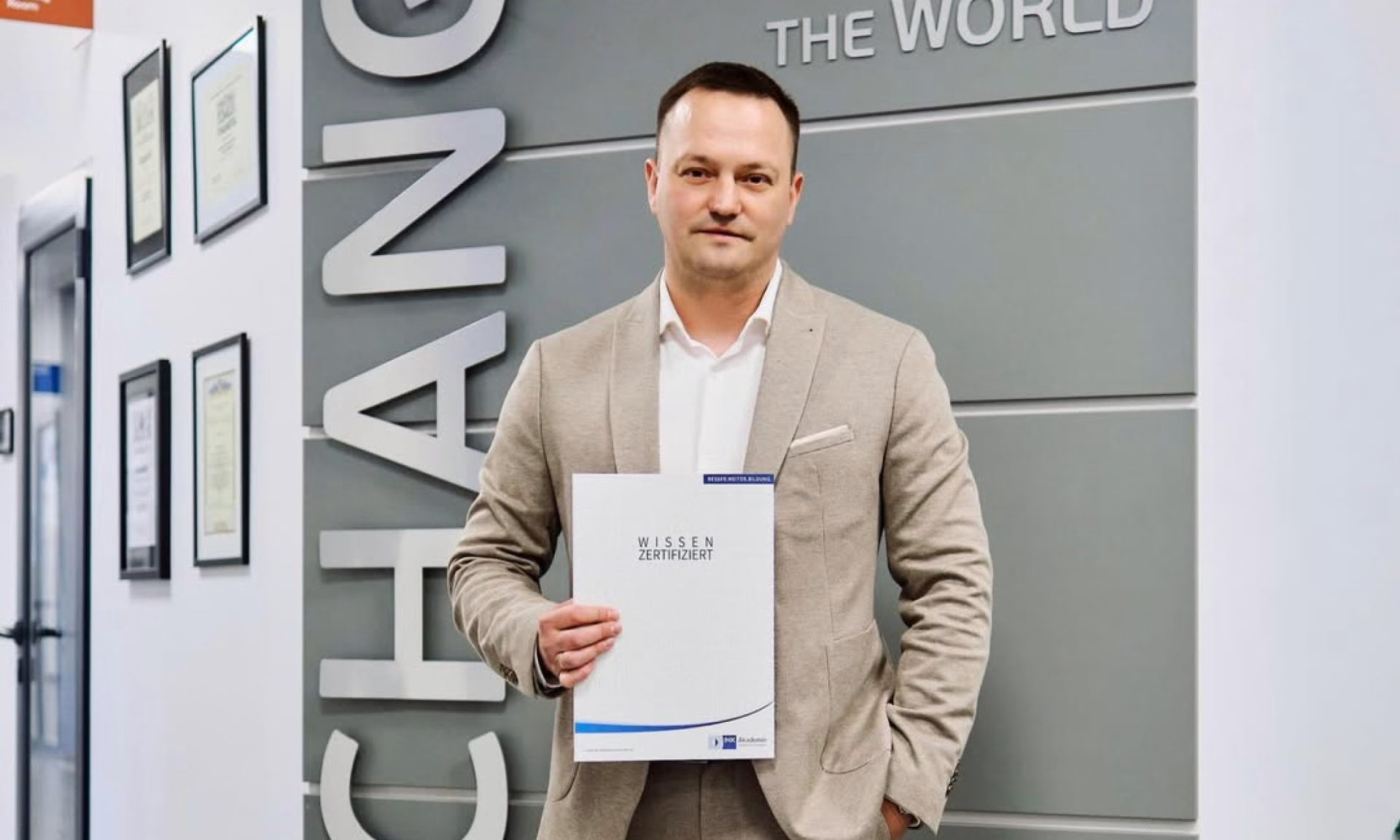
Serhii Morhun, Associate Partner and Head of ASA Group’s Business Protection Practice, discussed the changes proposed by the draft law and the issues that should be improved before the second reading during Business Protection 2025 – A2B Forum.
In a panel discussion with representatives of the Business Ombudsman Council and the Economic Security Bureau, Serhii presented the business community’s position and examined a number of risks that must be addressed if the law is to become an effective instrument.
ASA Group was a partner of Business Protection 2025 – A2B Forum, organized by the Ukrainian Advocates’ Association. We support platforms that bring together business, the legal profession, public authorities and human-rights institutions around a common objective: creating a safe environment for free enterprise in Ukraine.
A new approach to registering criminal proceedings
Key changes:
Information would be entered in the Unified Register of Pre-Trial Investigations only where an application contains sufficient information about circumstances that may indicate that a criminal offence has been committed
All offences under Article 191 of the Criminal Code of Ukraine, as well as economic offences committed by officers of business entities — except enterprises in which the state or a municipality holds 50% or more — would be registered exclusively by heads of prosecutor’s offices
Model advantages:
Clear responsibility: the decision would be taken by a specific official who would bear personal responsibility
Greater transparency: if a commissioned or bad-faith case is initiated, it would be clear that the prosecutor’s office was directly involved in initiating it
- Reduced powers for rank-and-file investigators, who would not be able to open cases without proper grounds
Reduced workload on law-enforcement agencies, which are often required to register obviously unpromising cases
Model risks
- Human factor: there is no absolute guarantee that a prosecutor will act with integrity
- Centralization of corrupt decisions: an unscrupulous head of a prosecutor’s office could become a “filter” for legitimizing commissioned cases
More difficult access to justice for victims: investigators may refuse registration on the grounds that the elements of an offence are absent
- Risk that an investigating judge may refuse to order an investigator to begin an investigation because, in the judge’s view, the application does not contain the same “sufficient information” indicating that an offence has been committed
Disputes overn investigative jurisdiction
Where investigative-jurisdiction rules are breached, a motion to change jurisdiction may be submitted to a higher-level prosecutor, except in the case provided for by Article 36(5) of the Criminal Procedure Code of Ukraine
- The prosecutor must consider the motion within 10 days of receipt and either grant or reject it
However, a refusal or an unlawful decision changing investigative jurisdiction cannot be challenged before an investigating judge — this was not addressed in the amendments to Article 303 of the Criminal Procedure Code of Ukraine
Ending “indefinite” asset freezes
Model advantages:
- In criminal proceedings where no notice of suspicion has been served, a freeze on funds or other valuables would last for up to four months
- The freeze could be extended for a specified period; without sufficient grounds, the court would refuse an extension
Assets would have to be returned within 30 days on the basis of an investigating judge’s order lifting the freeze or a decision closing the criminal proceedings
- If the case is closed by a prosecutor or investigator, the asset-freeze order would automatically cease to have effect
A new application for an asset freeze could be filed only where new circumstances or evidence exist
Key risk: the right to appeal an order lifting an asset freeze would remain, allowing enforcement of the order to be delayed.
Narrowing the grounds for urgent searches
Model advantages:
Urgent searches would no longer be permitted in cases involving economic offences
The ground of “saving property”, which allowed investigators to formally justify searches, would be removed
A right of appeal would be introduced against an order validating an urgent search, and the owner of the premises or property would have to be notified of the court hearing so that they could attend and present objections
Key shortcomings of the draft law:
- It does not address the problem of excessive bail, which often becomes a means of pressure both on suspects and on businesses
- The draft law no longer contains provisions imposing maximum time limits on freezes not only of funds and valuables, but also of other property — reportedly because of complex mutual legal assistance procedures
READ OTHER NEWS
We share news about ASA Group’s team achievements, professional development, rankings and accolades, speaking engagements, and new partnerships.